Perabid E-commerce website
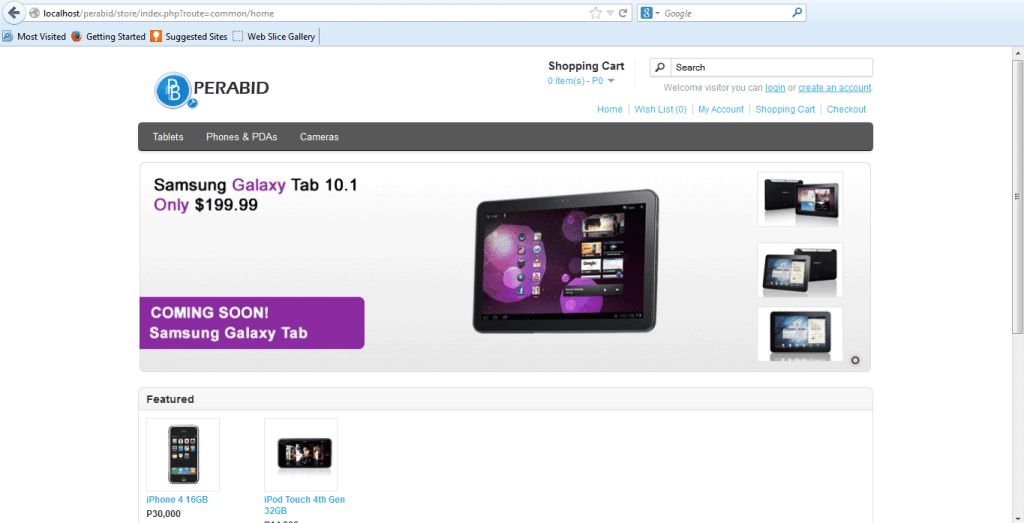
A Developer’s Retrospective: Architecting the Perabid E-commerce Platform
As a developer, certain projects become significant milestones in one’s career. For me, one such endeavor was Perabid, an auction-style e-commerce platform that I conceived, designed, and built entirely on my own. It was a comprehensive exercise in full-stack development that required me to architect everything from the database schema to the application logic. The foundation I chose for this complex solo project was the classic and dependable LAMP stack.
Project Concept: The Vision for Perabid
The vision for Perabid was to create a more dynamic and engaging alternative to the standard fixed-price online store. The platform was designed as a marketplace where users could bid on items in real-time, creating an environment where value is determined by demand.
The name, Perabid, was a deliberate choice, blending the Filipino word for money, “pera,” with the site’s core function, “bid.” This was a nod to its origins here in the Philippines and aimed to create a memorable and locally relevant brand. My goal was to build a fully-featured platform, handling everything from secure user registration to a functional real-time bidding engine.
Technical Architecture: A Solo Implementation of the LAMP Stack
To bring Perabid to life, I selected the LAMP stack for its power, stability, and open-source nature, which was critical for a self-directed project.
- Foundation: Linux I deployed the application on a Linux server. Its reputation for security and stability provided the peace of mind needed for an application handling user data and transactions. It served as a reliable and efficient operating system foundation.
- Web Server: Apache To handle all incoming HTTP requests, I configured the Apache HTTP Server. Its flexibility and power were essential for serving the site’s dynamic content and managing the concurrent user connections typical of an auction platform.
- Database Design: MySQL I personally designed the relational database schema using MySQL. This was the heart of the platform, built to logically store all critical data including user accounts, product catalogs, active bids, and transaction histories. A well-structured database was paramount for performance, ensuring that queries to fetch data—like finding the highest bid on an item—were executed instantly.
- Application Logic: PHP The engine driving the platform’s functionality was PHP. I wrote the entire server-side application logic in PHP, creating the scripts that managed user sessions, processed form submissions, interacted with the MySQL database to execute the bidding logic, and ultimately generated the dynamic web pages for users.
Why I Chose LAMP for a Solo Project
Undertaking a project of this scale alone required a strategic choice of technology. The LAMP stack was the ideal solution for several reasons:
- No Cost Barrier: Being entirely open-source, the stack allowed me to build a commercial-grade application without any software licensing costs.
- Maturity and Community: As a solo developer, I relied heavily on the extensive documentation and vast community support for the LAMP stack. This ecosystem was an invaluable resource for troubleshooting and development.
- Complete Control: The stack afforded me the flexibility and complete control necessary to single-handedly architect a custom bidding engine and all other bespoke features from scratch, without the constraints of a proprietary framework.
Conclusion: A Formative Solo Endeavor
Developing Perabid was a formative experience. It was a project where I was not just the coder, but also the database architect and system administrator. It solidified my skills across the entire development lifecycle and stands in my portfolio as a testament to what can be achieved with a clear vision and a robust technology stack. The lessons in database design, backend logic, and server management I learned from building Perabid continue to inform my professional work today.